CARLOS SANDOVAL MENDOZA
The Body of Ligia and El Instrumento (below)
Berlin / Germany, 2007
Dance and choreography: Ligia Lewis
Software and wireless hardware-development: Oori Shalev
Further programming: Iftah Gabbai
Gloves construction: Jorgen Brinkman, STEIM Foundation
Premiere 2007, fünf+1 — Raumklangkonzerte Festival
Kleiner Wasserspeicher, Berlin
Commissioned by the TU elektronisches Studio, Technische Universität, Berlin
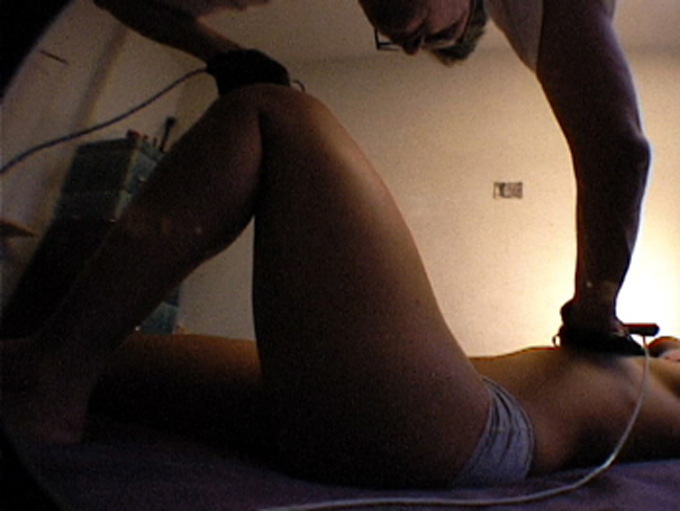
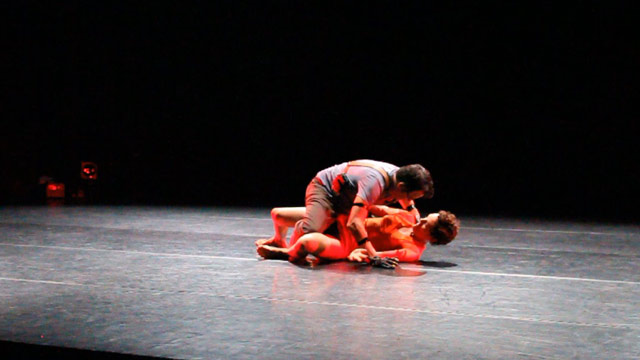
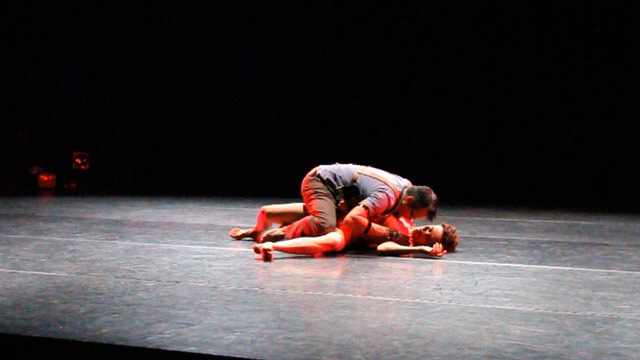
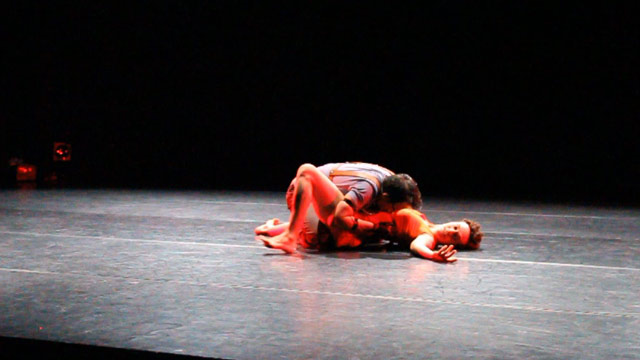
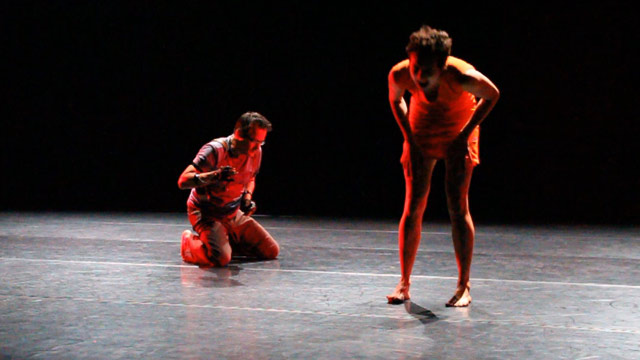
The Body, research phase in studio, video still.
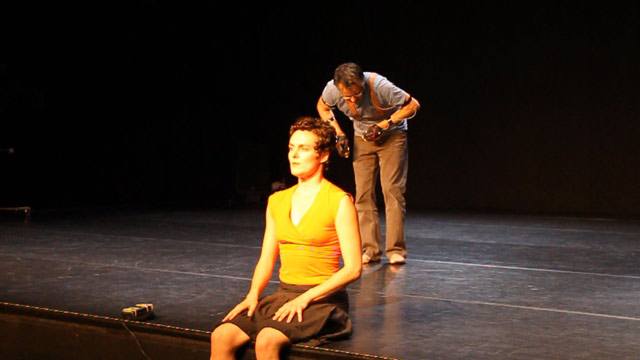
I wear the sensor gloves. Ligia Lewis is on stage with me, naked. I touch her — applying pressure, force, restraint to different parts of her body. The gloves read the contact and send data to a software system. The sounds come from there.
But I don't look at a screen. I don't operate the software. A third person — an operator, offstage, following a map score — watches which part of Ligia's body I am touching and activates the corresponding sound cluster. The audience sees two bodies. The acoustic field is run by someone they don't see. Three nodes, one performance, no single point of control.
Ligia was given general instructions and decided the final choreography herself. Her movement is not a response to my touch — it precedes it, surrounds it, exists independently of it. She is not a passive surface. The piece is a negotiation between two bodies and a hidden third, in which the sounds belong to none of them entirely.
The sensor gloves were developed at STEIM over many years — the same technology used in The Birth of a Ship, The Tilt, and Die Schaukel. In fact, the software random architecture is quite similar to the software used for the Trees. Here they are applied not to a ship's hull or a tree's branch but to a human body. The map score assigns sound clusters to zones of the body, but within each cluster the software picks sounds at random — the same randomizing principle running through the entire catalogue. The operator triggers the cluster. Chance determines what sounds. Nobody in the room fully controls the result. The piece does not resolve what it sets in motion: that was its only instruction.
(There is no video documentation of this performance)
El Instrumento
Hamburg / Germany, 2010
Choreography and dance: Trinidad Martínez
Music and composition: Carlos Sandoval
Developed during a paid residency at the DanceKiosk Festival, Murcia, Spain
Premiered as part of DanceKiosk, Hamburg
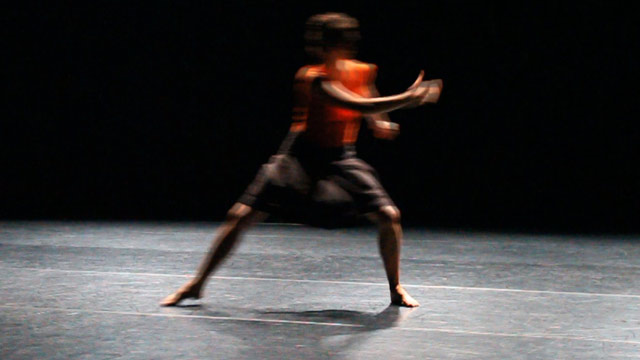
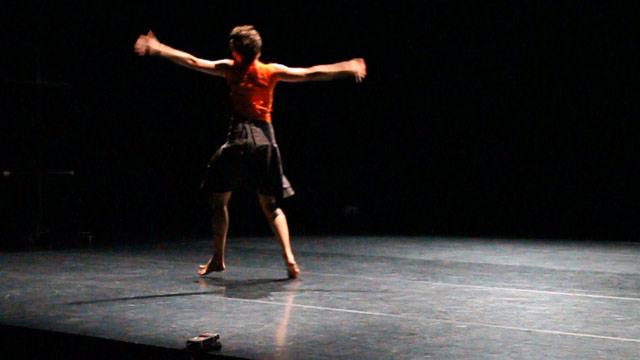
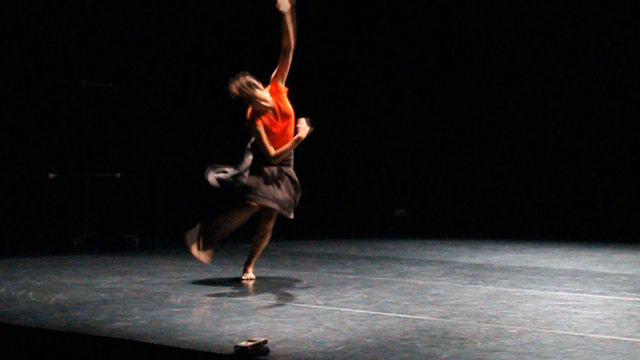
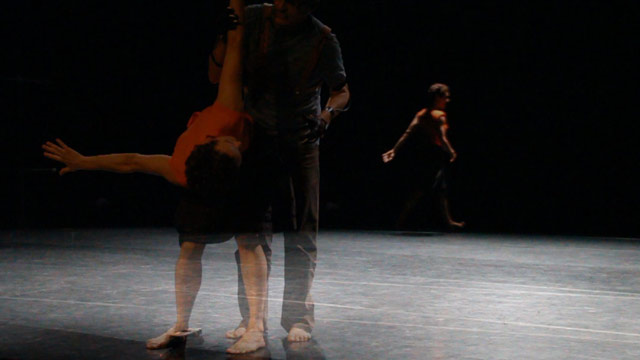
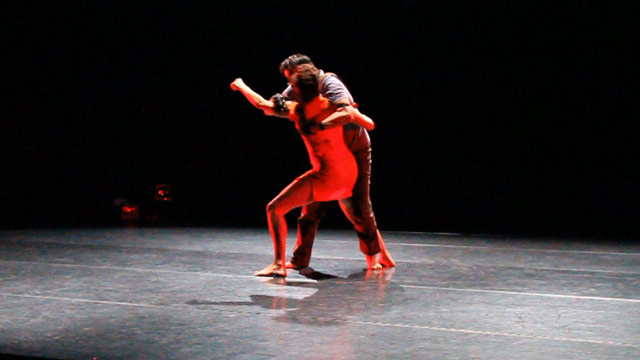
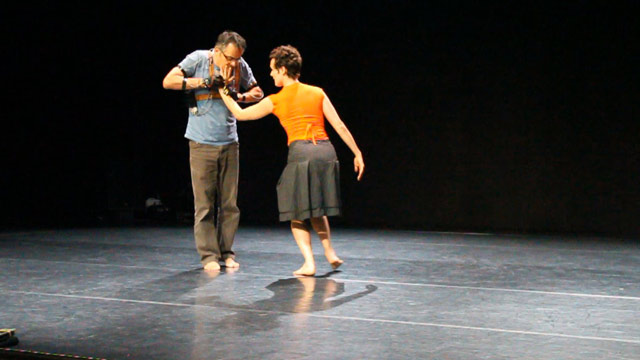
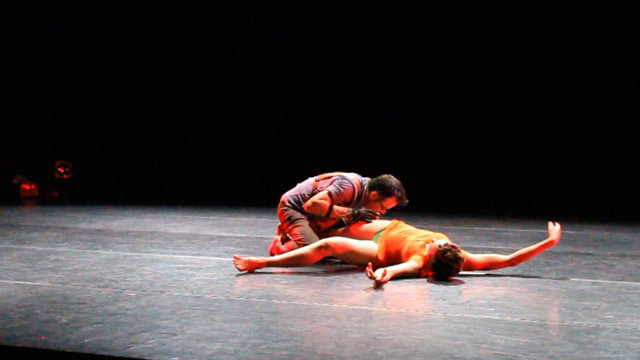
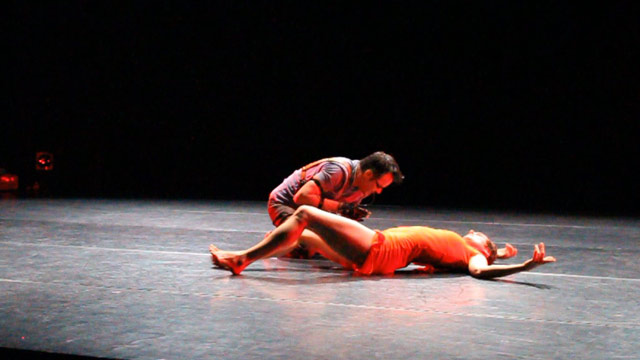
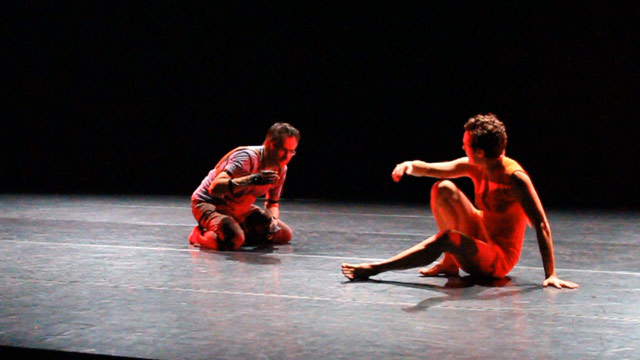
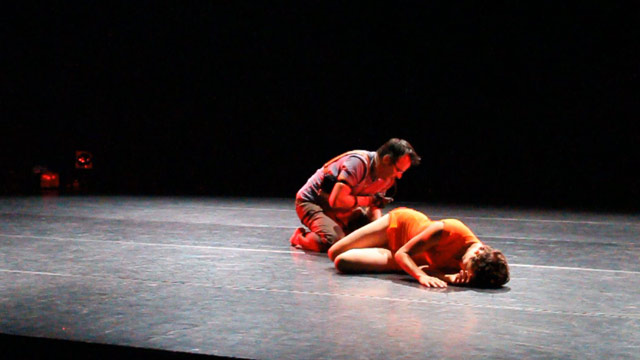
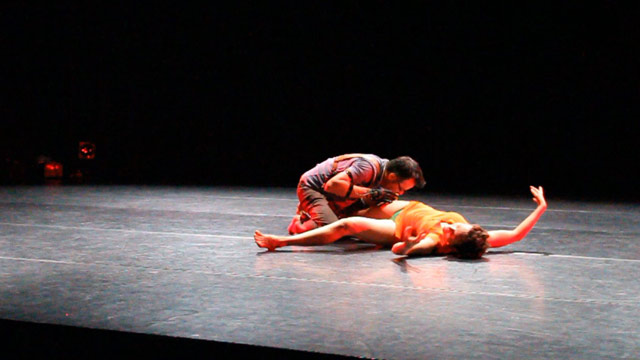
The sensor gloves return, three years later, in a different situation. If The Body of Ligia — practically a passive territory — was mapped anatomically, each body part assigned to its own sound cluster, El Instrumento is not a body map. It is not a territorial continent map. It is an ever-changing continental weather map. The sounds come out at random, naturally, governed by the dramatic, or sensitive, or tactile, or rejecting situations on stage. El Instrumento is an open-to-life sonic landscape, and what determines the sound is not where I touch, but the relationship itself — the tensions, the shifting emotions, the emotional pornography, the balance or the imbalance.
Yes, I want to use her, possess her, make her sound — and the instrument resists, screams, or shuts up. She resists: she will not be reduced to a passive object tuned only to what I want. The sound it triggers stops being a research protocol and becomes a relationship: a labyrinth of consequences.
We move like any couple — its conflicts, its highs and lows. She frees herself. She also seeks me. She flees. She also approaches. Neither position holds for long. The piece does not resolve into power and submission, or into escapes and embraces — it holds all of them, a trembling suspension between the two, for as long as we are both on stage.