|
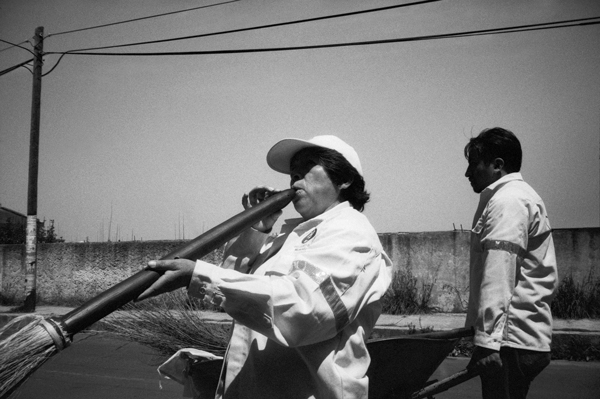
Maura Leticia M. Aranda
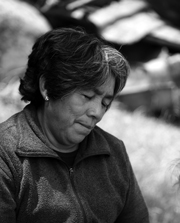
As
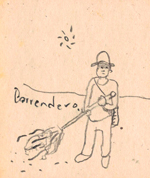
a child she worked as a domestic
worker and local gardener. “I
used to fix trees,” she tells
us, “loosen the soil, cut the
grass, before I was hired as a
permanent street sweeper.” At
five in the morning she sets out
for the storage shed, where she
takes her wheelbarrow, her
broom, and her “marinas,” two
enormous lobster-shell-like
sheets with which she gathers
the dust that doesn’t cling to
the broom. She has swept the
same stretch of street for 28
years.
We
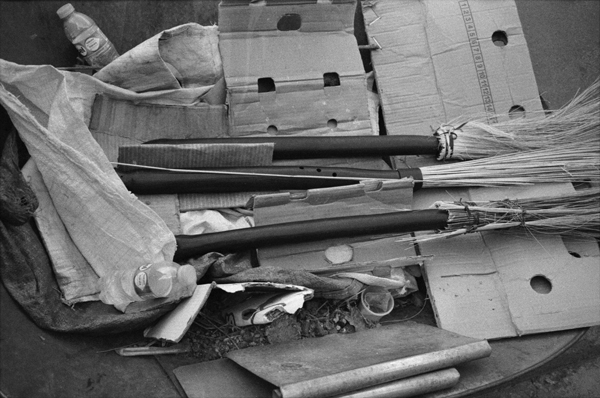
decide to replace the broom
handle with a black clay flute
(because the act of sweeping is
like a mantra of caresses: it
sets us to meditating,
whistling, or whispering a
song). We decorate the flutes
with stalks from the hills of
San Lorenzo, and so they look
like paintbrushes, with which
the street sweeper seems to
caress the street instead of
sweeping it.
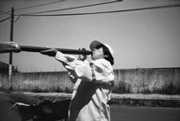
From time to time
she plays the flute, but the
neighbors don’t notice anything.
They only say, “Good morning,
Maura!” followed by a couple of
bleary-eyed, resigned dogs.
 |
|
Juan Vazquez
Antonio M. Gonzales
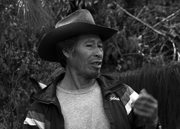
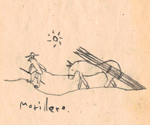
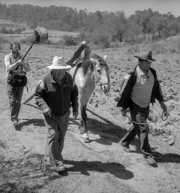
The
morillos were the pencils
of the hill. The
morillero horses used them
to trace the footpaths along the
slopes, like veins of graphite
binding the forests tightly to
the city. The peasants were
experts at everything: they knew
how to sow, how to find the lost
young of the sheep, how to build
roofs with
morillos, how to recognize
woods and stones; they knew how
to follow the tracks of animals
that walk in reverse (now
extinct), how to use herbs (to
cure ailments or to become more
fertile), how to read the stars,
predict the weather, and survive
lightning.
They also knew how to speak with
dogs and teach children to untie
knots while looking straight at
the Sun. Sometimes they were
even musicians, and they were
the only Philosophers of the
Enveloping Sky.
 |
|
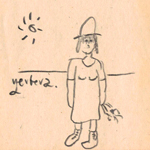
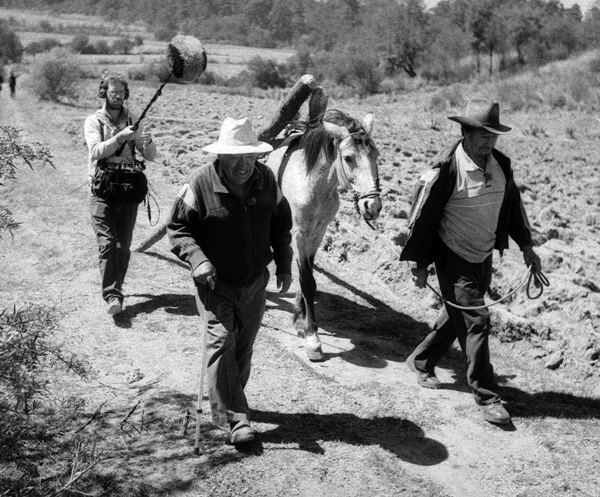
Juan Perez Rodriguez
y Guadalupe, his daughter
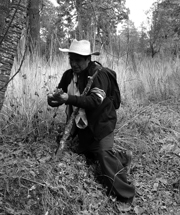
Doña
Victoria, his grandmother—a
healer with bony hands—snatched
a quince-wood switch from little
Juan’s hands and, with it, gave
him his first lesson across the
backside, for having nearly
destroyed an aloe plant with a
wooden-sword blows. And so
Juanito learned to respect
plants as if they were people.
Herding sheep in the forest was
a punishment in San Lorenzo, and
Juanito was sent off as a
shepherd for having failed in
elementary school. Ironically,
this became his second great
school, since in his retreat as
a shepherd-hermit, other ascetic
sheep herders taught him
everything about medicinal
herbs. There he came to know the
hill, its hidden corners, and
its plants.
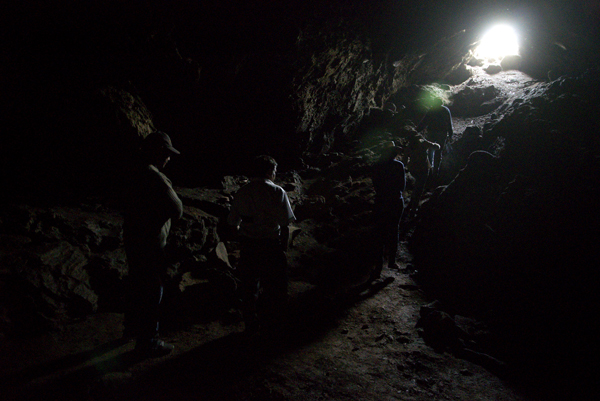
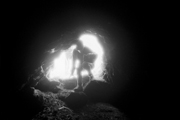
Now, at seventy, he walks with
his daughter Guadalupe toward
the cave of San Pablocan, and
inside they play the
drum-stones. With its offerings
and its little chapels, San
Pablocan is a proto-pyramid, or
a church inside a gourd—a hollow
where underground rivers and the
roots of trees breathe at the
same time.
|
|
Rosa Maria P. Arguelles
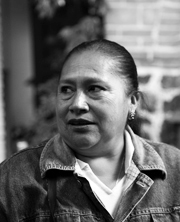
Her mother taught her to make
tortillas the hard way, slapping
her hands with an electrical
cord if the griddle was left
empty, since she would not
tolerate “wasting my firewood,
you idiot.”
“My life experiences have led me
to transform pain and
adversity…” says Rosa María,
rubbing the metallic tendons of
her hands, or the marks her
mother left on her heart, “…I
have learned and I have
forgiven. My shames have been
cleansed.”
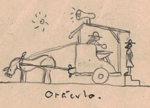
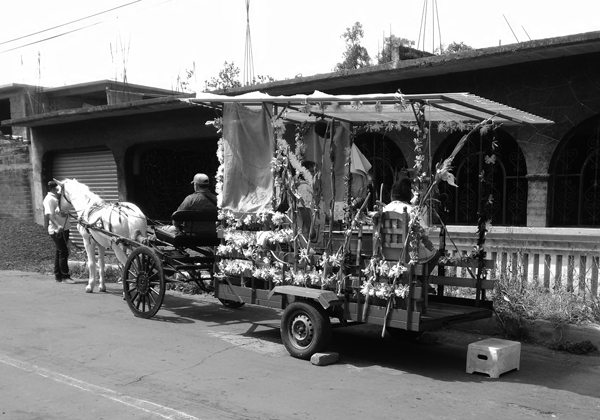
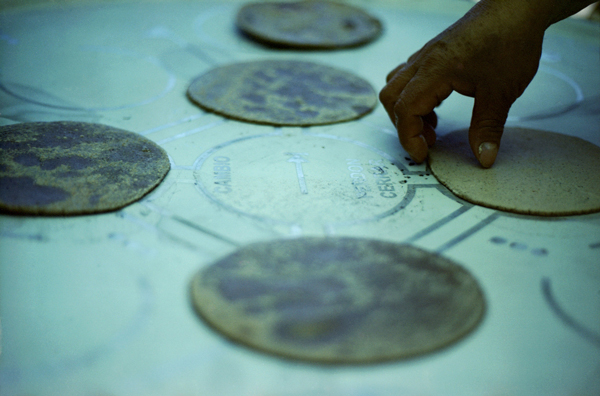
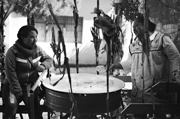
The oracle is a cart–tortilla
stand that carries a griddle
engraved with the Oracle of the
Tortillas. The oracle’s powers
are: “Destiny Power,” “Guiding
Power,” “Opposing Power,” and
“Allied Power.” Through these
powers, the tortillas speak
differently, depending on
whether they puff up or fail to
puff up on the griddle.
After her reading, the customers
take their steaming tortillas
with them and eat them with sea
salt, or just as they are,
without fossils, like tulip buds
turned into buttons.
 |