Six soundtracks of Nancarrow's dreams when he was three years old.
Suzanne Farrin, ondes martenot · Russell Greenberg, percussion · Evan Runyon, double bass
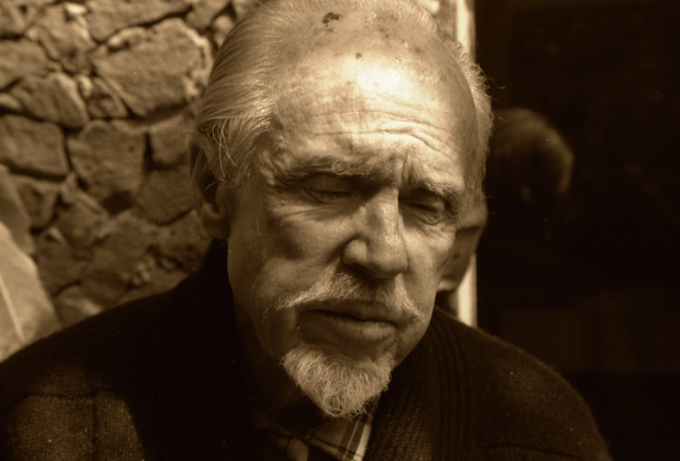
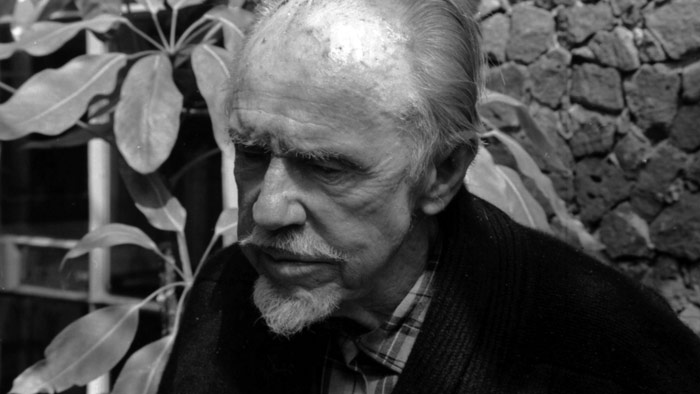
C. Sandoval, 1994, Mexico City
The subtitle is the piece: Six soundtracks of Nancarrow's dreams when he was three years old. Anyone who reads it and continues has already decided — not about the music, but about their willingness to remain inside the frame. The door is left ajar.
Conlon Nancarrow abandoned the human performer out of necessity. His imagination required a body that human physiology couldn't provide. The player piano was the only mechanism capable of executing non-human, rhythmic thought. He lived, without naming it that way, at the threshold between humans as machines and machines as human.
The Six Lost Songs pulls him back across that threshold — backwards, and without his consent. Not the adult composer exceeding the human, but the child dreaming the machine before knowing what music is. Fragments of player piano music appear inside that dream (tape), as if the future were already lodged in it. Origin and result collapse. The music does not come from elsewhere; it was always already there.
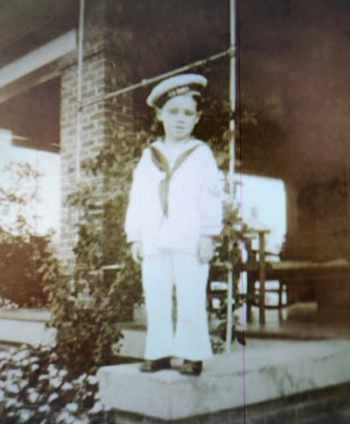
Archive C. Nancarrow
The work was commissioned, composed, rehearsed, and performed in earnest. Three musicians played a dead composer's constructed unconscious at the Americas Society in New York. The institutional frame held without knowing what it was holding. Whether any of it is true is not the question. The question — already answered by the applause — is whether it matters.
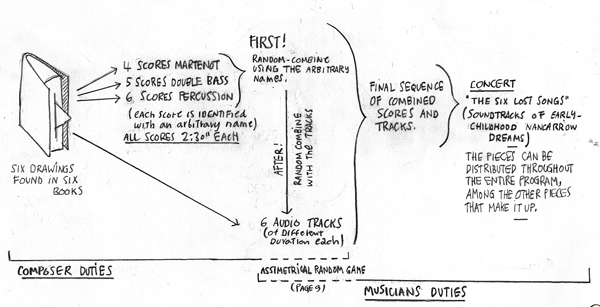
The piece is structured in six parts, each running 2'30". Their sequence and relationship to six audio tracks is determined by a spinning bottle on a circular graph — a random process that governs what comes when, and how the parts relate to each other. The six parts can be distributed across an entire concert program, surfacing and disappearing among other works. The piece has no fixed position in the evening. It infiltrates.
Years ago, while cataloguing Nancarrow's library, I imagined discovering hidden traces: notes, letters, private remains. That desire became, years later, a fiction — six invented drawings attributed to him found in different books in his library. These titles are never spoken, never projected, never heard. Available only to the performers, they give no instructions and produce no sound. A portrait painted on the inside of the frame. From these fictional drawings, all material in the piece is generated through random processes. A system built on an origin that never existed.
This is Field Logic built on a fiction: a field set in motion by a spinning bottle, over a dead composer's invented drawings, with no center and no predetermined result — only the system, running.
Assembling existing materials — fictional or not — into a functional world, setting it running, and stepping back is already a demiurgic act. A field set in motion by a spinning bottle, over a dead composer's invented drawings, performed in earnest at a New York institution. In this case, a demiurgic homage to someone so important to me.