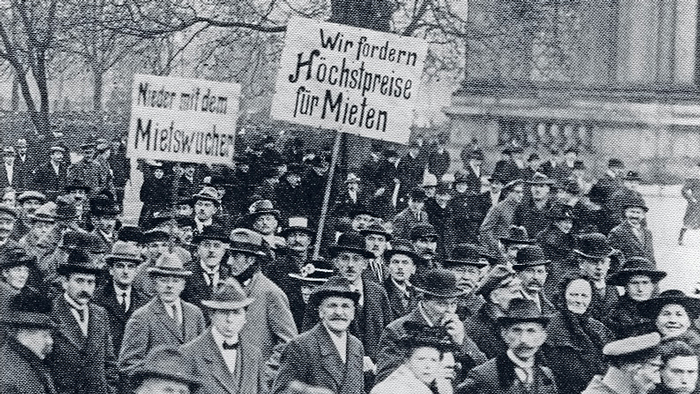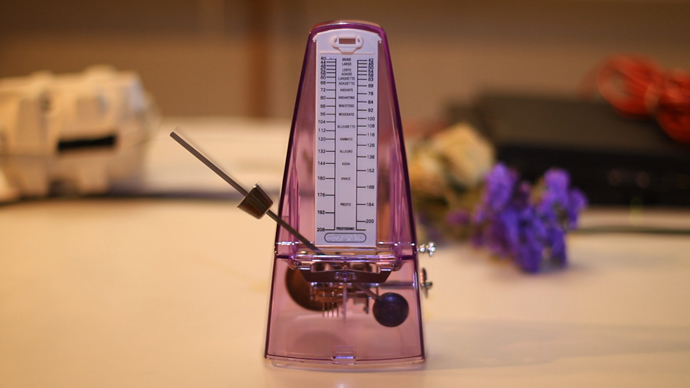
A magenta polycarbonate metronome. A Berlin demonstration against rising rents, 2014. The metronome adapts to the crowd's tempo — accelerating when the chanting accelerates, slowing when it slows. What appears as responsiveness is in fact a feedback loop: a form of acoustic coupling in which the device and the crowd begin to stabilize each other. The viewer cannot see the manipulation.
A narrator runs through the video with the calm authority of someone who has understood everything and is now explaining it to you. Slowly. Patiently. The way you explain something to a child before sleep. He appears to follow the images — naming what you already see, confirming what you already feel. But this, too, operates as a form of attractor-based coordination: perception is gently pulled toward a shared interpretation, just as the crowd's rhythm is pulled toward a shared tempo.
Manipulation that looks like accompaniment. The metronome and the voice function as parallel regulators within the same social-acoustic field, aligning behavior and perception without appearing to impose structure. He is doing to the viewer exactly what the metronome is doing to the crowd: introducing a minimal signal that organizes a distributed system from within.