|
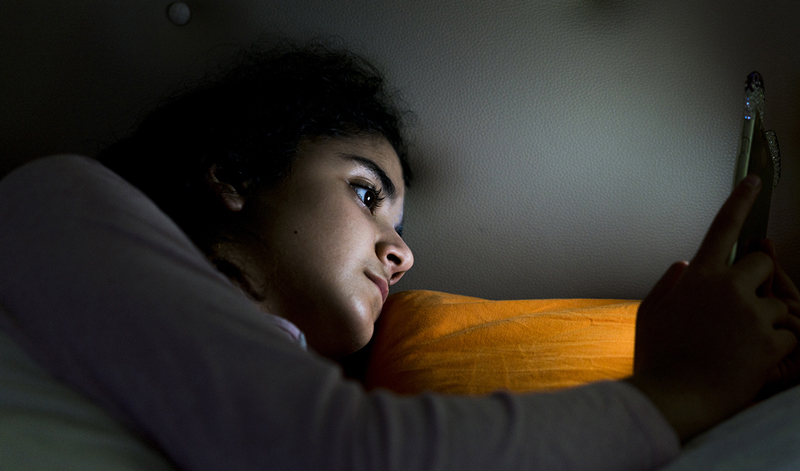
Hearing
in Bed was made during the
late COVID-19 lockdowns, for an
online (out of obligation) festival
(Foro Internacional de Música
Nueva, México City), under the
condition that no two performers
or two listeners could be in the
same room. Eight musicians —
four Mexican, four Swiss — each
recorded their part individually
on video.
The work
used two types of score sent as
data to the musicians. One,
consisted of selected TikTok videos
to be used as score — and be
instrument-synced. This
is the logic of TikTok's Use
Audio function — a mass
imitation machine that
paradoxically produces
individuation. The
second score is
a teleprompter: musical notation
combined with written
instructions, leaving space for
improvisation. I up-cycled, the
Antilegos 3 score
to be recorded by performers.
The body is
variable, individual,
interpretive. Everyone uses the
same source; no two results are
the same. The audio is the
machine side. The body's
interpretation is the human
side. The TikTok interface is
the
threshold between them — and
the grid recreates that
threshold at the level of
ensemble.
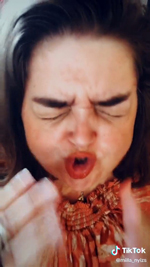

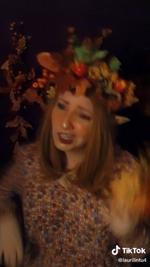
One text, three identities
The grid on stage is
that posture made collective —
eight people, each alone, each
in their own frame, producing
something that looks exactly
like an ensemble without ever
having been one.
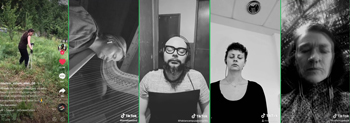
Score one based on TikTok videos
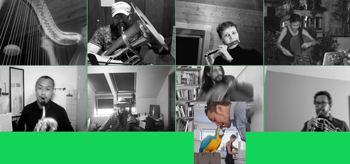
Score two based on Antilegos
3's teleprompter score,
with intermittent TikTok solos
The piece
is autobiographical. During the
months of assembling the
material, I was scrolling
compulsively — a social media addict,
like many others, filling the
hours the pandemic had emptied.
I was not observing from
outside. I was inside the
scroll.
The
lockdown stripped the shared
spaces that had been papering
over it, and left people with
their screens, their "tribes",
their performance of
"togetherness". Hearing in
Bed is an early document of
that moment: the grid as mirror,
the ensemble as social fiction,
the scroll as the new commons.
Whether what comes next is
adaptation or dystopia remains,
for now, an open question. |