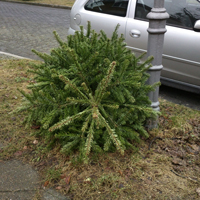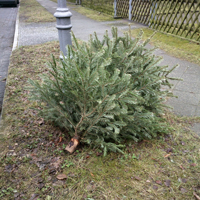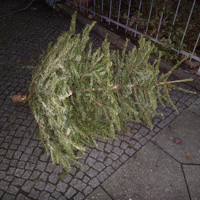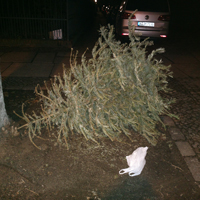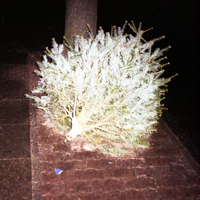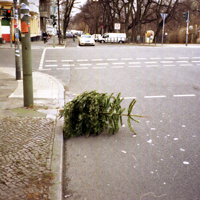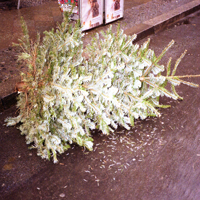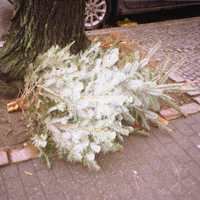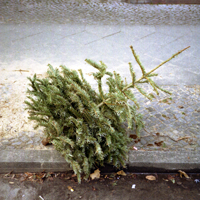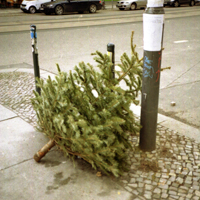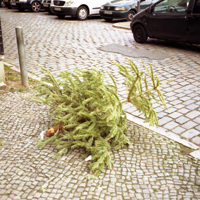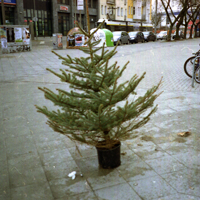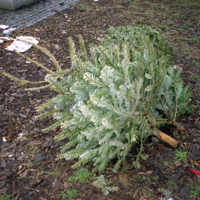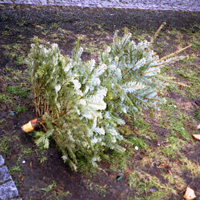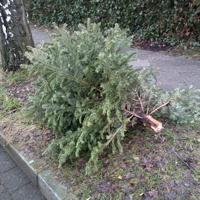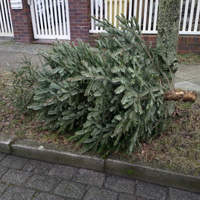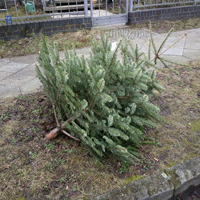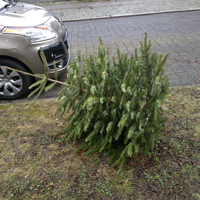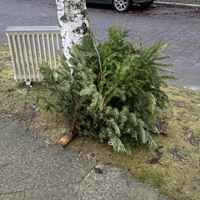
"Der Wald" unfolds as an ontological chain.
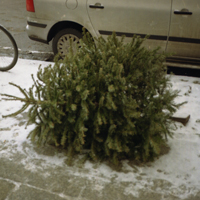
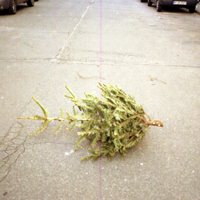
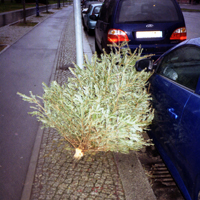
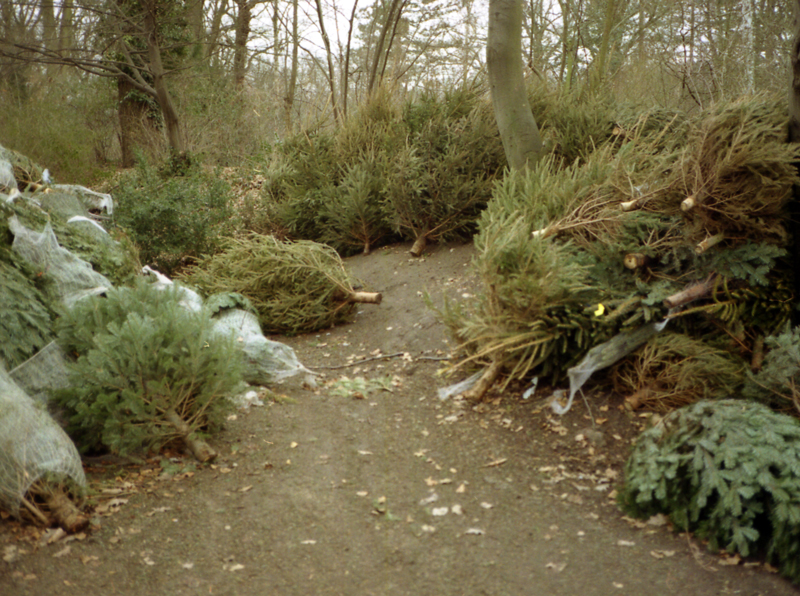
Canetti had brilliantly intuited a coherent disposition: from the forest to order, from order to the army, from the army to the camp, from the camp to the concentration camp. I simply followed his rhythm — from the concentration camp to the industrial Christmas tree, from the industrial Christmas tree to the living room. That connection became unavoidable when I found, in the depot of a park, a mountain of unsold trees wrapped in plastic. My visual memory immediately associated it with photographs I had seen of piles of corpses at the Sachsenhausen Memorial-Museum, near Berlin, taken by Russian and Polish journalists.
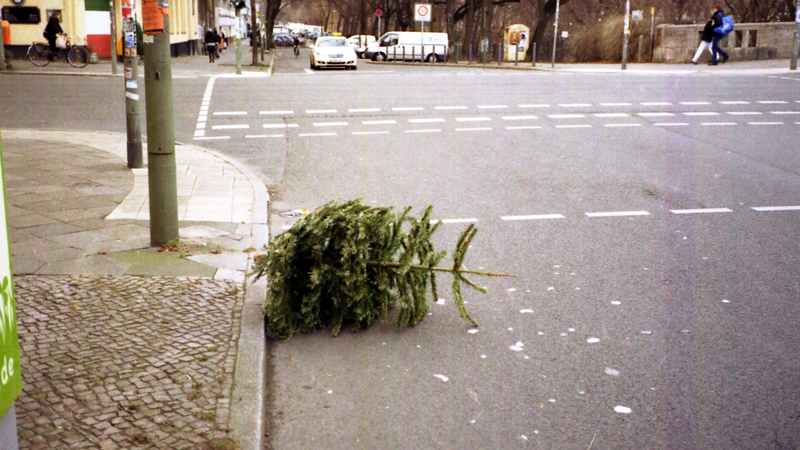
DER WALD - YOUTUBE UPLOAD
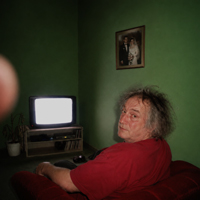
And then I thought about contemporary Germany. The figure that emerged was not the soldier, nor the party militant, but the man sitting in his living room, watching television beside the domesticated forest brought into his home each Christmas. The old myths had not vanished. The witch, the demon, the dark creature said to inhabit the depths of the German forest had simply changed appearance. It had moved into the living room. Canetti taught me how to link ontologies.
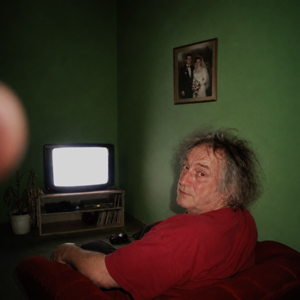
The blank television monitor became important. It stood for blindness, but also for mediation: for partial news, selective attention, and the subtle manipulation through which reality is organized into what can be seen and what can remain outside the frame. The danger was no longer its monstrous face, but its familiarity. The old myth of the dark German forest heart ended up producing The National Innocence: the German who does not find out, and if they do, prefers not to know.