I have always admired ships the way I admire horses — beasts of war and peace, of poetry and massacre, of endless travel, of encounters and clashes of cultures. I have always made these connections: things interchanging values and functions, machines receiving human properties, objects holding a soul.
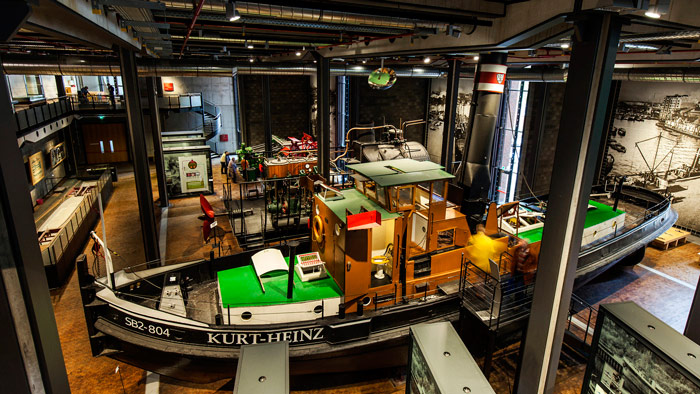
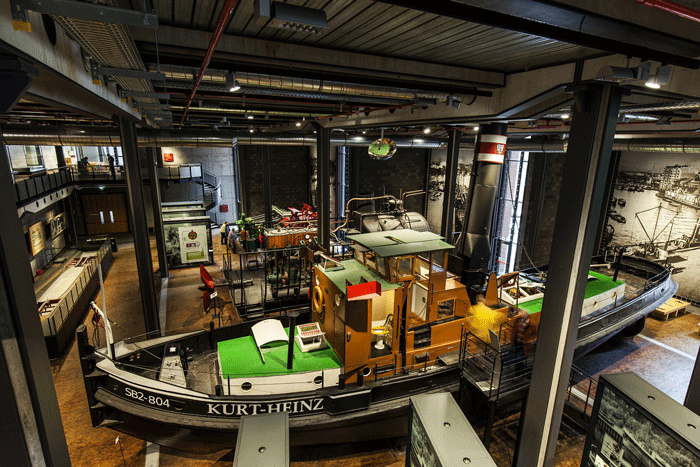
The Deutsches Technikmuseum's shipping hall is occupied by old ships of huge scale. Three percussionists climb onto them and play them. The intention was to animate the machines. What happened instead is that the machines dwarfed the musicians — the percussionists became the puppets of the ships they were playing, ants giving voice to something vastly beyond them. The ships were already alive. They had simply been waiting.
The piece moves through three sections toward a birth. In the final section I begin assembling a structure from simple pieces of wood on the floor of the hall — two meters long, a mast, a hull taking shape while the aged ships watch. A nest surrounding what is not yet alive. The sounds of construction are amplified through sensor gloves fitted to my hands, pressed against the wooden boards of the ship being born.
What arrives looks more like a shipwrecked man's raft than a ship. Something between vessel and wreck, between arrival and whatever comes after. This is what a baby is. The old organisms have seen this before.