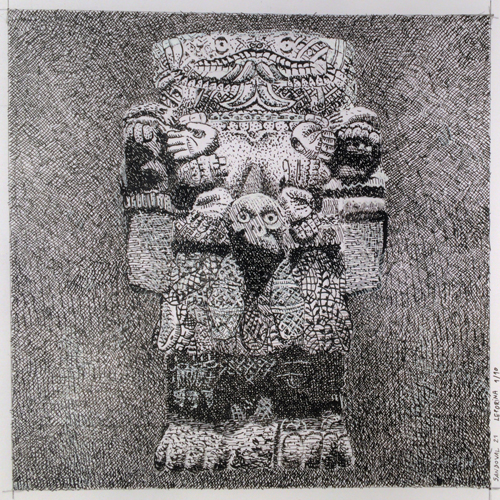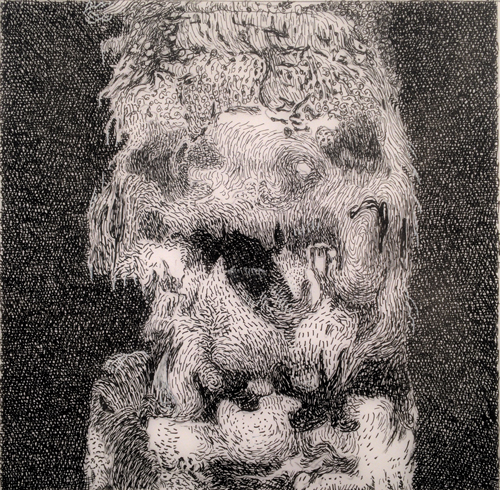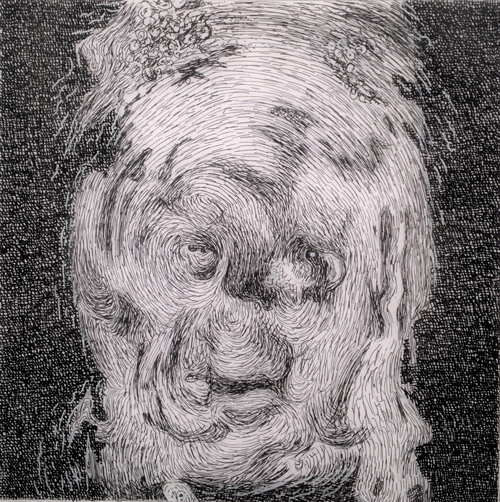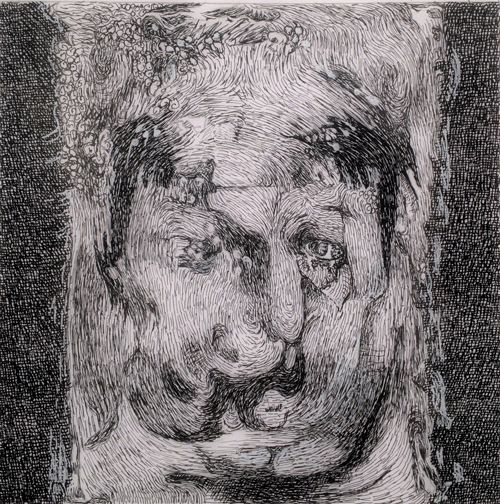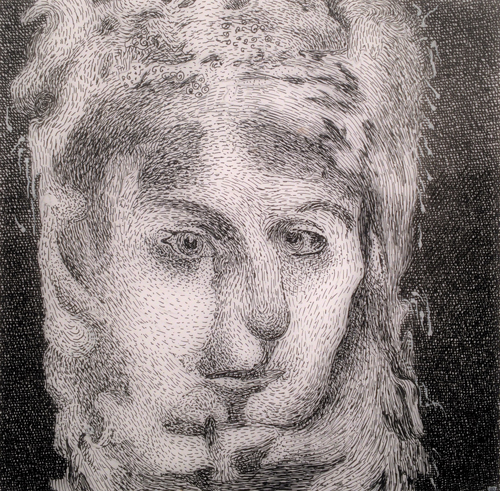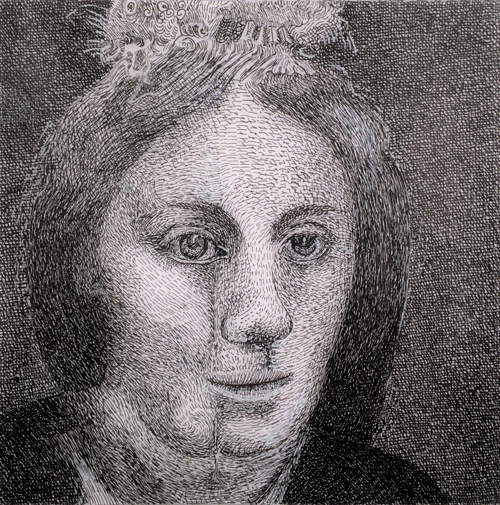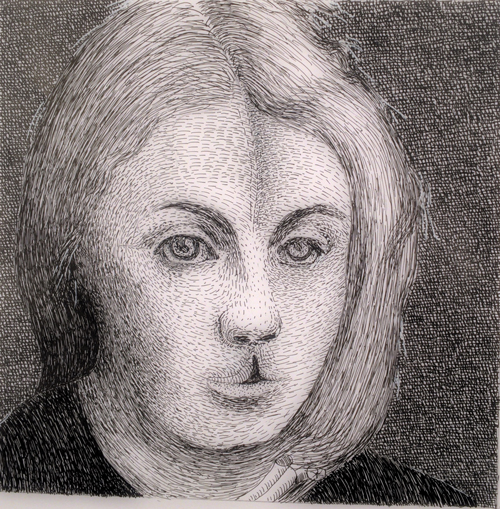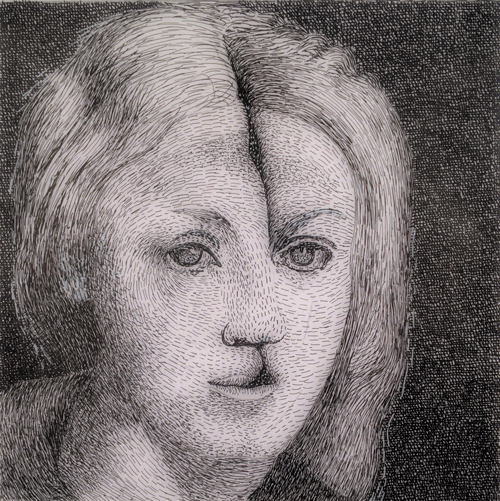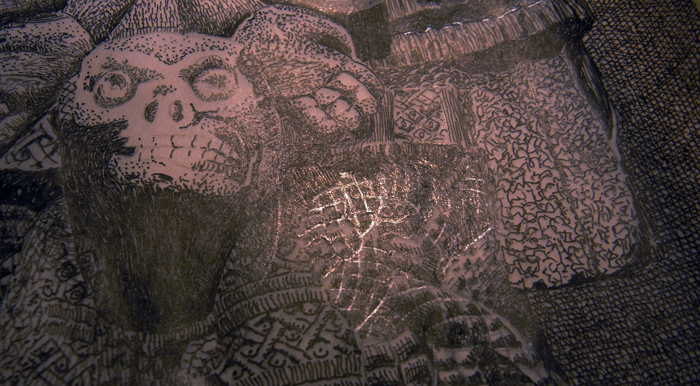
With the last Leporina of this series, I try to recover Coatlicue's lost symmetry — a monumental stone sculpture whose symmetry reminds me of the figures H. Rorschach devised for personality diagnoses based on subjective interpretation. What matters most for this series is the documented cultural bias: what a person sees in an ambiguous blot depends on their prior cultural training, not on anything objectively present in the image — the same mechanism at work when an AI model trained on European portraits turns Coatlicue's split head into a generic face, knowing nothing of its real origin.
Rorschach's own reliability remains an open scientific dispute, not a settled matter. Exner's 1974 Comprehensive System tried to standardize interpretation; the later R-PAS attempted to fix its flaws with a broader normative base. Neither reached consensus — inter-rater reliability was never adequately demonstrated for many of its variables, and a recent review concludes R-PAS did not resolve the test's old credibility problems, in some respects regressing toward a pre-scientific psychology.
More than an artificial relation between the "pre-Hispanic" and the "contemporary," the series arbitrarily uses geometric elements with no relevant cultural value and extrapolates them as signs or myths that appear to establish an ontological relation between the initial and final components. But this relation is ambiguous, contradictory in essence: is this the story of Coatlicue's revenge against the West, turning its women into leporinas? Or is that split lip a precious gift from Coatlicue? Does Coatlicue, an essential leporina herself, recognize these women as her daughters? Mythic stories, perhaps worthy of the Odyssey, conjured out of nothing.
Using an old app to generate the original images from the image of Coatlicue is only instrumental. I took advantage, however, of its ideological load — the app is trained to generate only Da Vincian Renaissance faces — or rather: the app's ideological load set the course. Unlike the Post-COVID series, where I do not let that ideological load define itself, in 7 Leporinas I allow it to. At a price.